
Every year thousands of taxpayers hand over sensitive financial documents to a preparer without reading the one paper that protects them most the engagement letter. If you’ve ever wondered why your accountant asks for a signature before touching your tax return, this guide explains exactly what that document is, what it covers, and why skipping it can cost you.
Quick Answer
A tax engagement letter is a written agreement between a taxpayer and a tax preparer or CPA that outlines the scope of services, responsibilities, fees, and deadlines for a tax filing engagement. It protects both parties by clarifying what the preparer will (and won’t) do, and it’s typically signed before any tax work begins, often required under IRS Circular 230 and AICPA professional standards.
- A tax engagement letter is a signed contract, not just paperwork it defines the legal relationship between you and your preparer.
- It protects you from scope disputes, hidden fees, and missed deadlines.
- Most licensed CPAs and Enrolled Agents are required to use one under professional conduct rules.
- It typically covers services included, client responsibilities, fees, confidentiality, and liability limits.
- Local firms in Richmond, Henrico, and Chesterfield, VA commonly renew these letters every tax season.
What Is an Engagement Letter? (Engagement Letter Meaning)
An engagement letter is a formal document used across professional services legal, accounting, and consulting to define the terms of a working relationship before any billable work starts. In plain terms, it’s a mutual understanding written down so nobody can later claim “that’s not what we agreed to.”
In the tax world, this document is called a tax preparer engagement letter. According to guidance published by the American Institute of CPAs (AICPA), engagement letters exist to reduce misunderstandings between practitioners and clients, particularly around scope of work and fee expectations. The IRS also references similar documentation standards under Circular 230, which governs practitioners who represent taxpayers before the agency.
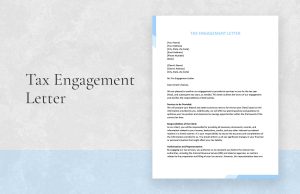
What Does a Tax Engagement Letter Actually Cover?
A properly drafted engagement letter tax preparation document usually includes the following sections:
- Scope of services — which tax forms and schedules the preparer will file (e.g., Form 1040, Schedule C, state returns).
- Responsibilities — what the client must provide (W-2s, 1099s, receipts) and by what date.
- Fee structure — how billing works, including flat fees, hourly rates, or additional charges for complex situations like audits or amended returns.
- Confidentiality terms — how your financial data will be stored and protected.
- Limitation of liability — what happens if errors occur due to incomplete or inaccurate information you provided.
- Term and termination — how long the agreement lasts and how either party can end it.
- E-filing authorization — consent for the preparer to electronically submit your return to the IRS.
Each of these sections exists to prevent a specific, common dispute. Fee disagreements, missing documents, and confusion over what was actually filed are the top three issues cited by state boards of accountancy in complaint reviews.
Why Do You Need to Sign a Tax Engagement Letter?
Signing isn’t just a formality it has real legal and financial weight.
- It protects you as the client. If your preparer misses a deadline or makes an error outside the agreed scope, the letter documents what they were actually responsible for.
- It protects the preparer. If you fail to provide accurate documents and your return has errors, the letter shows the preparer relied on the information you gave.
- It sets expectations on fees. No one wants a surprise invoice in April. The letter locks in pricing terms upfront.
- It’s often required for compliance. CPAs and Enrolled Agents operating under AICPA Statements on Standards for Tax Services (SSTS) are encouraged to document engagements in writing, especially for complex returns.
- It creates a paper trail. If a dispute ever escalates to a state licensing board or small claims court, the engagement letter is the first document referenced.
Tax Engagement Letter vs. Verbal Agreement: A Quick Comparison
| Factor | Written Engagement Letter | Verbal Agreement |
|---|---|---|
| Legal clarity | Clearly defined scope and fees | Open to interpretation |
| Dispute protection | Documented evidence for both sides | No formal record |
| Fee transparency | Fees stated upfront in writing | Often discussed loosely |
| Professional standard | Recommended/required by AICPA and many state boards | Not compliant with best practices |
| IRS audit support | Shows preparer’s documented scope of work | Difficult to prove |
| Renewal process | Signed annually or per engagement | Repeated informally each year |
As the table shows, a written letter isn’t extra red tape it’s the difference between a documented professional relationship and an informal handshake deal that offers no protection if something goes wrong.
How to Read a Tax Preparer Engagement Letter Before Signing
Before you sign, take a few minutes to check these details:
- Confirm the forms listed match what you actually need filed (federal, state, local).
- Check the fee section for any conditional charges, such as costs for handling an IRS notice.
- Look for a document deadline — most firms require your paperwork by a set date (commonly mid-March for an April filing).
- Review the liability clause so you understand what happens if information you submitted was inaccurate.
- Check the termination clause in case you need to switch preparers mid-season.
If any section is unclear, ask the preparer to explain it before signing. A reputable firm will walk you through it without hesitation.
At The End:
A tax engagement letter is one of the simplest ways to protect yourself before handing over sensitive financial information. It defines exactly what your preparer will do, what you need to provide, and what fees to expect, removing the guesswork from tax season. Whether you’re working with a solo preparer or a full CPA firm in Richmond, Henrico, or Chesterfield, VA, always ask for a signed tax engagement letter before your return is filed. If your current preparer hasn’t offered one, that’s worth a conversation, or a second opinion, before next filing season.
Frequently Asked Questions
What is a tax engagement letter in simple terms?
It’s a written agreement between you and your tax preparer that spells out what services will be provided, what you’re responsible for, and what the fees will be, all before the work begins.
Is a tax engagement letter legally binding?
Yes. Once both parties sign, it functions as a contract and can be referenced in disputes over scope, fees, or missed responsibilities.
Do I need to sign a new engagement letter every year?
In most cases, yes. Tax situations, fees, and IRS rules change annually, so reputable preparers issue an updated letter each filing season.
What happens if I don’t sign an engagement letter?
Many licensed CPAs and Enrolled Agents will not begin work without one, since it protects them professionally. Unlicensed preparers may skip this step, which is itself a red flag.
Can I negotiate the terms of a tax engagement letter?
Yes. Fees, scope, and deadlines can often be discussed and adjusted before signing, especially for straightforward returns.
Where can I verify if my tax preparer follows proper engagement standards?
You can check a preparer’s credentials through the IRS Directory of Federal Tax Return Preparers or confirm CPA licensing status through your state board of accountancy.